ATSA Perú
El problema
ATSA Perú operaba su sistema de Registro Técnico de Vuelo Diario (RTVD) sobre una aplicación Xamarin.Forms que había alcanzado los límites de su vida útil técnica: sin cobertura de tests, lógica de negocio acoplada directamente a las vistas y un manejo de errores ad-hoc que dificultaba el mantenimiento y la evolución del sistema.
La naturaleza crítica del dominio aeronáutico exigía una solución que garantizara la integridad de registros de vuelo, tripulantes, aeronaves y discrepancias técnicas, independientemente de la disponibilidad de red — un requisito fundamental para operaciones en zonas sin conectividad.
El reto era migrar completamente la aplicación preservando toda la lógica de negocio del dominio aeronáutico, modernizando la arquitectura para hacerla testeable, mantenible y escalable, sin interrumpir las operaciones del equipo de vuelo.
La solución
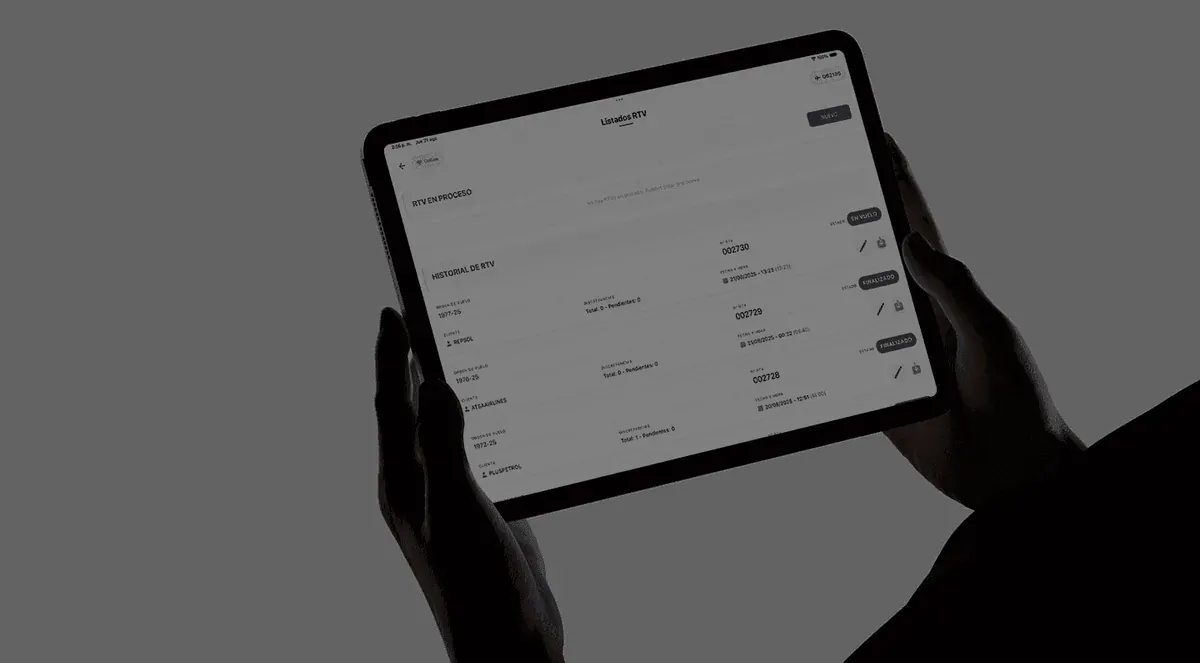
El equipo de Alaz diseñó e implementó una nueva aplicación móvil en React Native con TypeScript, aplicando Clean Architecture para separar completamente el dominio aeronáutico de los detalles técnicos de infraestructura y presentación.
La arquitectura offline-first garantiza que los registros de vuelo puedan crearse, editarse y firmarse digitalmente sin conexión a internet, sincronizándose de forma transparente cuando la red está disponible.
Migración desde Xamarin a React Native
Se reescribió completamente la aplicación desde Xamarin.Forms a React Native, conservando toda la lógica de negocio del dominio aeronáutico y ganando soporte nativo para iOS y Android desde una única base de código.
Clean Architecture con Dependency Injection
El sistema se estructuró en capas (Domain, Application, Infrastructure, Presentation) utilizando Inversify para inyección de dependencias, asegurando que la lógica de negocio sea completamente independiente del framework y testeable de forma aislada.
Sistema RTVD completo
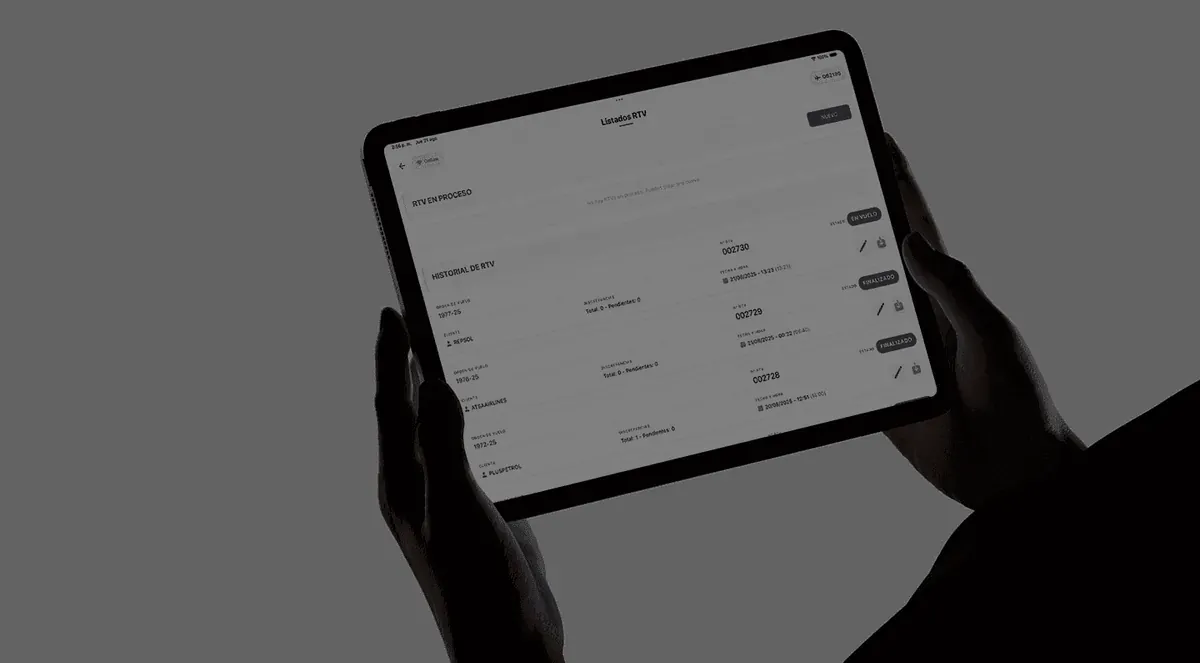
Se implementó el módulo principal de Registro Técnico de Vuelo Diario con soporte para piernas de vuelo, control de combustible y aceite, chequeos VOR, tiempos de vuelo, aterrizajes y despegues por tripulante, y registro de aeronave.
Firmas digitales y trazabilidad
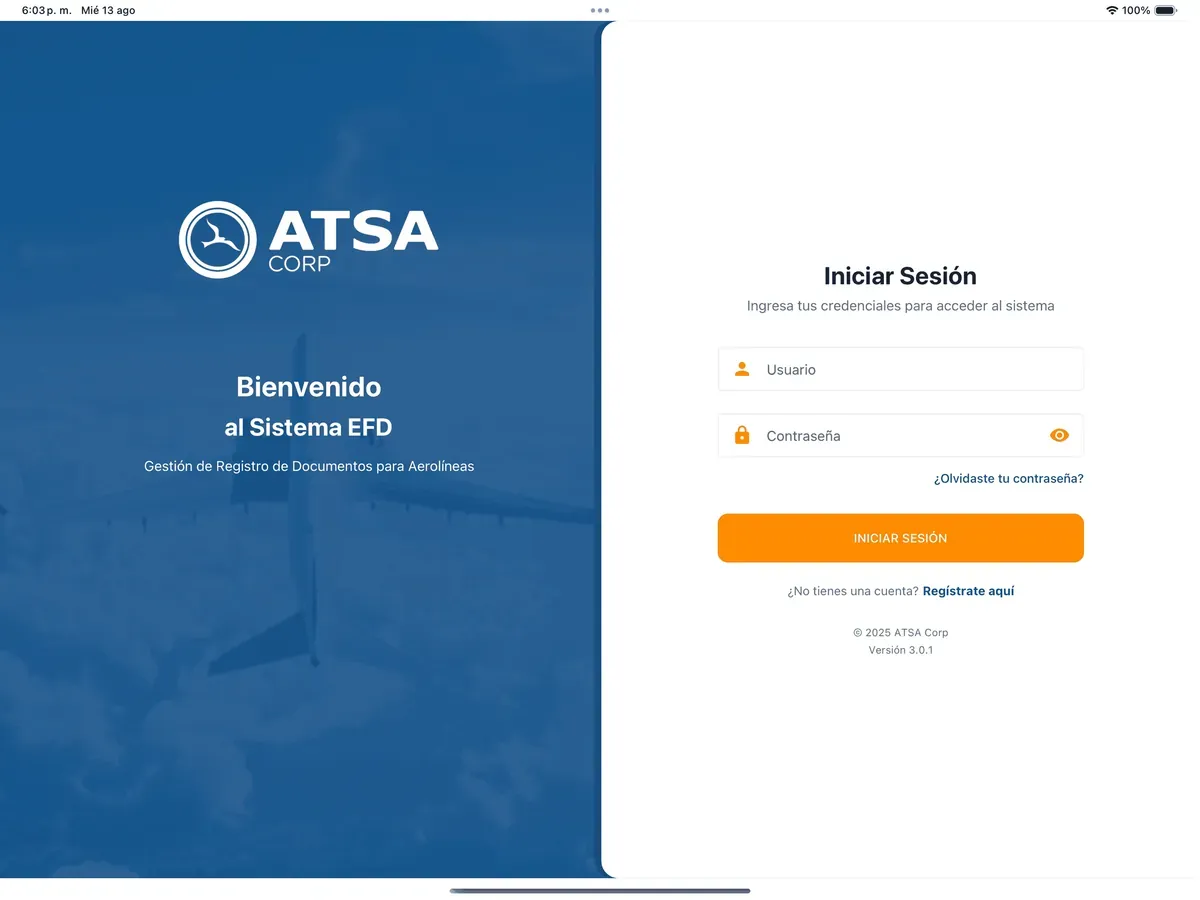
El sistema incorpora firmas digitales certificadas para el cierre de registros, garantizando la trazabilidad y validez legal de cada documento aeronáutico generado.
Arquitectura offline-first con Realm
Se implementó una base de datos local con Realm que permite operar en modo offline completo. Los datos se sincronizan automáticamente con el servidor cuando se restablece la conexión, sin pérdida de información.
Gestión de discrepancias técnicas
Se desarrolló un módulo de control de discrepancias que permite registrar, seguir y cerrar deficiencias técnicas de aeronaves de forma estructurada, alineado con los estándares regulatorios aeronáuticos.
Monitoreo y distribución profesional
Se integró Sentry para monitoreo de errores en producción, Firebase App Distribution para ciclos de QA y Fastlane para automatizar los releases a App Store y Google Play.
Resultados
Cero deuda técnica en la nueva base
La migración a Clean Architecture eliminó el acoplamiento entre vistas y lógica de negocio, permitiendo evolucionar el sistema sin riesgos de regresión.
Operación garantizada sin conectividad
El enfoque offline-first permite al personal aeronáutico completar registros de vuelo en terreno, incluso en zonas sin acceso a red, con sincronización automática posterior.
Cobertura de tests desde el inicio
A diferencia del sistema Xamarin anterior con cero tests, la nueva arquitectura fue diseñada para ser totalmente testeable, con pruebas unitarias sobre entidades, casos de uso y repositorios.
Plataforma unificada iOS y Android
Una única base de código en React Native reemplazó dos proyectos separados, reduciendo el esfuerzo de mantenimiento y asegurando paridad de funcionalidades entre plataformas.
Ciclo de releases automatizado
La integración con Fastlane y Firebase App Distribution profesionalizó el proceso de entrega, reduciendo el tiempo de publicación y permitiendo ciclos de QA más frecuentes.